Need residential furnace repair in Aurora?
Tell us what your system is doing. Send a request to contact@dutystops.living or use the form, and we will point you to a local provider.
No obligation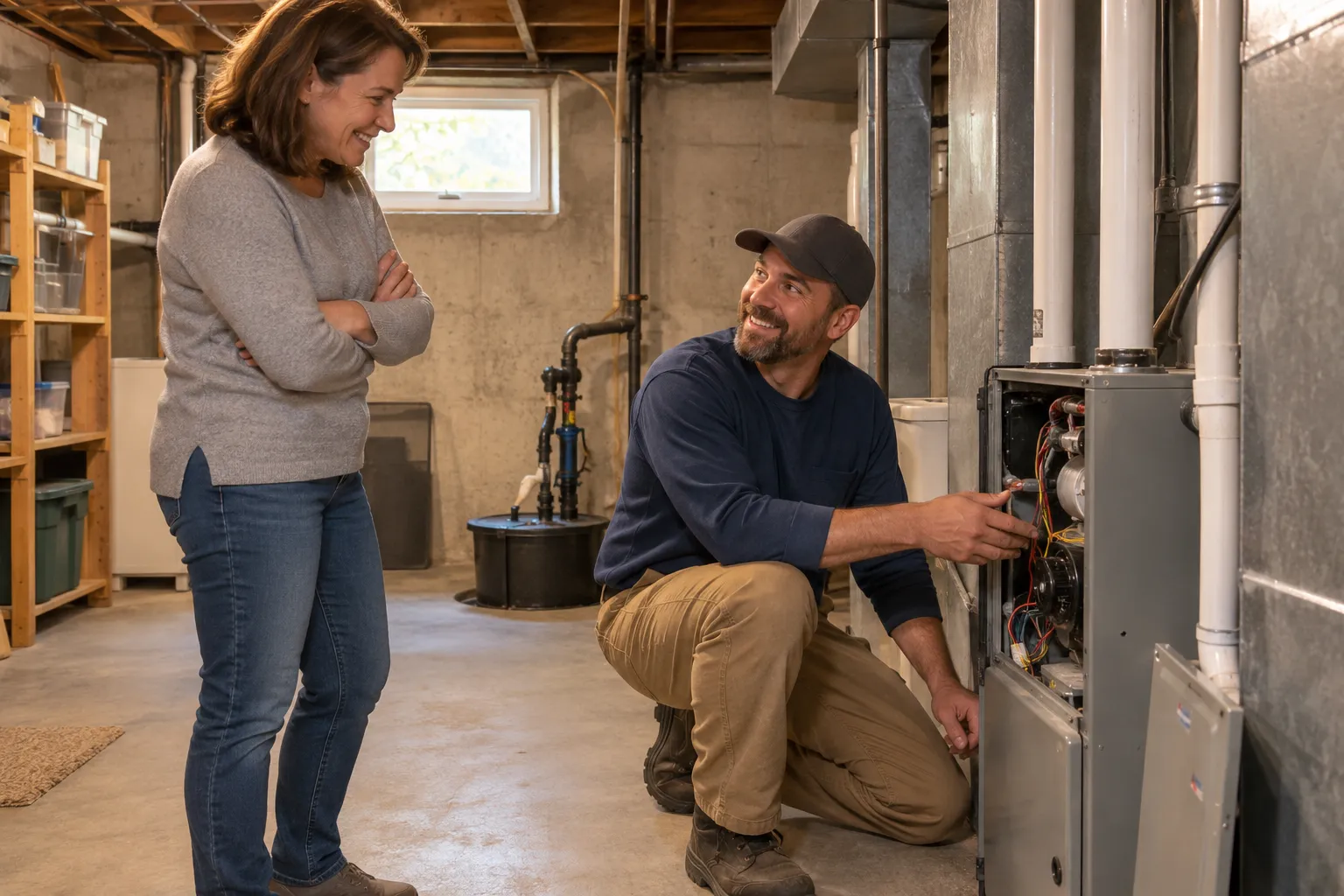
A furnace that will not start, blows cool air, or rattles loudly is more than a bother. In a place with cold winters and deep frost, a house can lose its warmth fast. Cold rooms put stress on pipes, floors and walls.
Dutystops Heating & Air is a referral service. We do not do the repair. We connect homeowners in the Aurora area with independent providers who handle residential furnace repair. You describe the problem, and a provider in our network can look at it. This page explains what to check, what to expect, and what to ask before you say yes. Protect the house first, then compare your options.
If you smell rotten eggs, leave the house. Take everyone, pets too. Do not flip switches, use a lighter or try to restart the furnace.
Once you are outside, contact your gas utility or emergency services. Wait for their all-clear before any provider visits.
Carbon monoxide has no smell. If a detector sounds, or anyone feels dizzy or gets a headache, go outside into fresh air and get help. Never silence the alarm and carry on.
The first hour feels like a nuisance. Rooms are still warm. This is the time to act, while you have choices.
Close interior doors to keep warmth in the rooms you use most. Then work through the quick checks below.
A few simple things cause many no-heat calls. Check these safely:
Do not open the burner area or fix gas parts yourself. That job belongs to a trained provider.
Frame houses from many decades ago lose heat quickly. In deep frost, pipes along outside walls and in the basement are the first to suffer.
Open cabinet doors under sinks. Let a faucet drip a little. Keep your sump pump powered, since spring thaw and heavy rain can bring water into a full basement.
Long stretches of cold can crack a pipe. Damp walls, stained ceilings and warped floors follow. A burst line often costs far more than the furnace fix.
Before it spreads, get a provider on the schedule. Request a callback to check provider availability in your area.
Not every problem is a total shutdown. Watch for these early signs:
A provider usually starts with the thermostat and power. Next come the safety switches, igniter, flame, blower and vent. Many also test for carbon monoxide.
You should hear what was found in plain words. Ask for a written quote before any work begins.
Most fixes fall into a short list:
A dirty flame sensor on day one is a small job. Left alone, the furnace may cycle hard, wear out parts and fail on the coldest night. Early action often means a smaller repair.
A warm, dry home keeps its floors, walls and pipes in good shape. Buyers and inspectors notice heating problems. Service records and clear paperwork can help at resale.
Some policies may cover sudden damage, so check your policy. Providers can often help document damage for a claim.
Think about replacement if:
If you search for furnace replacement near me, ask the provider to quote both choices side by side. Then compare.
Ask, then decide. Good questions to bring:
Dutystops Heating & Air is a referral service. We connect you with independent providers in our network. The provider sets the price and does the work.
Schedule HVAC service in the fall, before the first hard frost. Change filters on schedule and keep the area around the furnace clear. Strong heating and cooling habits help the whole system last.
Providers can check the flame, vent and carbon monoxide readings so the furnace is safe to run again.
A provider traces why the furnace stopped, from the thermostat to the burner and blower.
Igniters, sensors, motors and control boards are common parts a provider can fix or swap.
Ask for a written quote with parts and labor listed before you approve any furnace repair work.
Furnace repair prices vary by home, part and provider. These are typical U.S. ranges, not quotes. Always ask for a written quote before you approve work, and compare more than one.
| Item | Typical range | Notes |
|---|---|---|
| Diagnostic visit | $75 – $200 | Often applied to repair if you proceed |
| Igniter or flame sensor | $100 – $350 | Common, smaller fix |
| Thermostat replacement | $100 – $350 | Price depends on the model |
| Inducer motor or pressure switch | $250 – $800 | Safety part that blocks startup |
| Blower motor | $400 – $1,500 | Varies by motor type and furnace |
| Control board | $300 – $900 | Cost depends on the make and age |
Share what your furnace is doing, such as no heat, strange noises or short cycling.
Dutystops Heating & Air connects you with an independent provider in our network near Aurora.
The provider inspects the furnace and explains the problem and the cost.
You choose whether to go ahead. The provider does the work.
Steady heat guards pipes, floors and walls from cold damage and the moisture that follows.
Fixing a small fault early can keep it from becoming a larger repair.
We help you reach a provider and bring good questions.
Request an estimate and compare before you decide on any work.
Tell us what your system is doing. Send a request to contact@dutystops.living or use the form, and we will point you to a local provider.
No obligationTell us what your system is doing. Send a request to contact@dutystops.living or use the form, and we will point you to a local provider.
No obligation